

Diesel Outboards and Marine Sustainability: How Cox Marine Leads Cleaner Propulsion

James Eatwell, Chief Technical Officer at Cox Marine, explains how the British engineering company is driving cleaner propulsion for the global marine industry.
At Cox Marine, our mission is simple: build outboards that deliver power and performance without compromising the environment. As CTO, I see firsthand how innovation and responsibility must go hand in hand. Every engine we design, develop and build reflects our commitment to cleaner seas and smarter operations. From sending surplus energy back to the grid to pioneering dual-fuel technologies, we’re shaping the future of marine propulsion—today
Our flagship diesel outboard, the Cox Marine V8 300hp, is more than an engine, it’s a statement of intent. It combines high torque, fuel efficiency, and low emissions, creating a bridge to tomorrow’s cleaner fuels and propulsion systems in applications where electric alternatives are simply not viable.
Why Diesel Outboards Deliver Better Efficiency and Lower Emissions than Petrol
Efficiency is non-negotiable in serious marine propulsion. Diesel engines extract more energy per litre of fuel than petrol, and our flagship Cox Marine V8 300hp outboard is engineered to maximize this advantage. In real-world conditions, our V8 uses 30–35% less fuel at cruising speeds compared to equivalent petrol engines. The result: fewer stops, lower costs, and a tangible reduction in CO₂ per mile. This isn’t just theory. Testing for Lake Constance’s stringent BSO‑II requirements confirmed that the Cox Marine diesel outboard produces 20–35% less CO₂ than petrol alternatives, earning approval for use in one of Europe’s most environmentally protected inland waters.
Understanding Outboard Emission Standards
Cox Marine diesel outboards are certified to the world’s toughest standards, including EPA Tier 3 (US), IMO Tier II, and the EU’s RCD II.
Whilst petrol outboards meet their own spark‑ignition standards (EPA SI and RCD II), they are not subject to IMO NOx regulations, a key reason why Cox Marine diesel technology offers a higher level of compliance and future‑proofing for operators worldwide.
Renewable Marine Fuels: Why Our Outboards Are Ready for HVO Today
Our outboards are fully compatible with HVO (Hydrotreated Vegetable Oil), a renewable diesel fuel that can cut lifecycle CO2 emissions dramatically. No hardware changes, no infrastructure overhaul, just an even cleaner operation from day one. This aligns with global maritime goals to reduce greenhouse gases across the entire fuel lifecycle, not just at the exhaust. The infrastructure for HVO is also improving, driven by increasing demand and supportive policies.
Diesel Outboard Engines vs Electric
Electric propulsion is compelling for short-range, low-speed use cases. But for commercial operators, patrol boats, and offshore tenders, diesel remains unmatched for range, refuelling speed, and payload. Electric systems require large batteries and frequent charging—impractical for multi-day missions.
The future? Hybrid systems that combine diesel efficiency with electric assist for low-speed manoeuvres and operation in zero carbon locations. It’s a pragmatic step toward zero emissions without sacrificing reliability.
The Future of Marine Propulsion: Diesel Efficiency, Drop-In Fuels, and Zero Emissions
The International Maritime Organization (IMO) has set ambitious targets: net-zero greenhouse gas emissions by 2050. At Cox Marine, we’re supporting that trajectory on three fronts:
- Maximise efficiency now with marine‑purpose diesel outboards.
- Enable drop‑in fuels like HVO for immediate lifecycle CO₂ reductions
- Explore next‑generation fuels alongside hybrid systems, to scale zero‑emission pathways as infrastructure matures.
Future fuels: The Next Step
Hydrogen, methanol and ammonia are all attracting significant attention as potential marine fuels, each offering pathways to reduced emissions. At Cox Marine, our diesel-hydrogen dual-fuel outboard concept project has given us valuable insight into the challenges and opportunities offered by such alternative fuels. As the landscape evolves and supply infrastructures for hydrogen, methanol, ammonia, and other sustainable fuels mature, we remain committed to investigating and adopting the solutions that best support cleaner propulsion and operational reliability.
In Summary: Cleaner Seas Through Smarter Propulsion
Today, Cox Marine outboards deliver clear benefits while paving the way for the future:
- British engineering: Designed and built in Shoreham-by-Sea.
- Global compliance: EPA Tier 3, IMO II, RCD II, and BSO‑II approvals.
- Lower emissions: 30–35% less fuel at cruise, 20–35% less CO₂ than petrol.
- Ready for renewables: HVO-compatible for instant sustainability gains.
- Smart operations: Even our factory sends surplus energy back to the grid.
- High torque, low noise: Commercial‑grade thrust with refined NVH for crew comfort
Cleaner seas start with smarter propulsion. At Cox Marine, we’re proud to lead the way, combining performance, compliance, and sustainability in every engine we build.
About the author

James Eatwell oversees technology and product development at Cox Marine, leading innovation in sustainable marine propulsion from the company’s headquarters in Shoreham-by-Sea, UK. James is passionate about creating solutions that reduce emissions today and pave the way for zero-carbon fuels tomorrow.
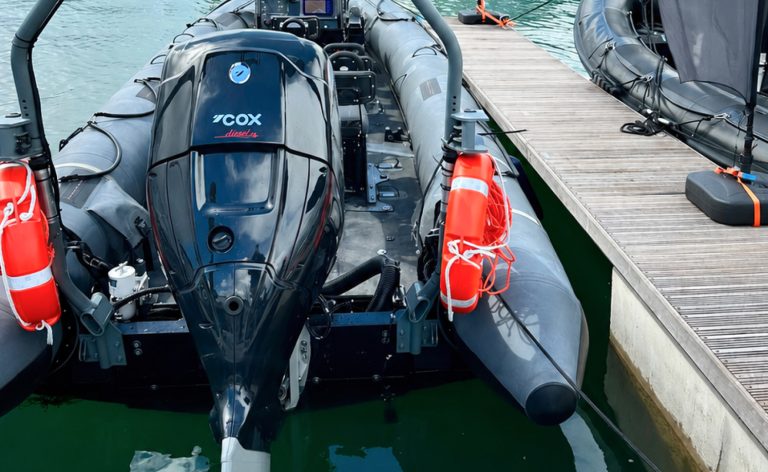

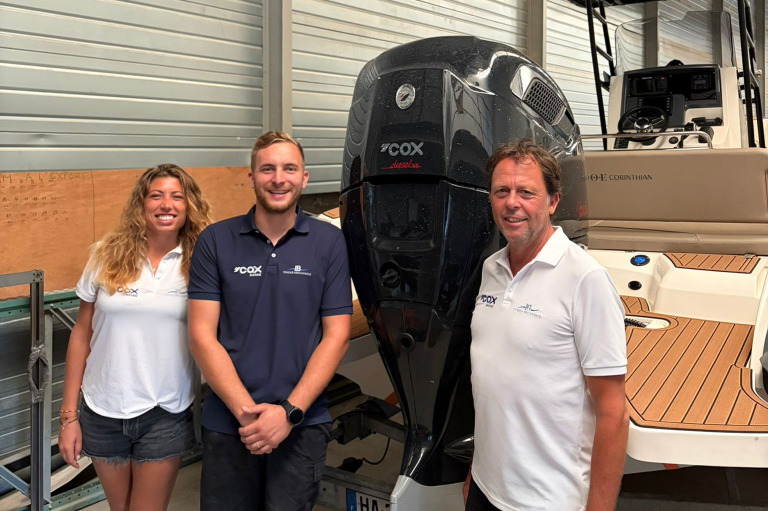
As Cox Marine continues to strengthen its global distributor network under its “fewer, bigger, better” growth strategy, trusted regional partners play a vital role in delivering technical expertise, aftersales support and customer confidence. In France, LB Tender Mechanics is at the forefront, bringing decades of marine engineering experience and a strong service infrastructure to support the growing adoption of diesel outboard technology.


Find a Cox Marine Dealer

About Cox Marine

